
Easy DIY Ideas for Stylish Wall Decor
Give Your Walls a Personal Touch
Blank walls can make a room feel unfinished, but decorating them does not have to be expensive or complicated. With a few basic supplies and a little creativity, you can make wall decor that reflects your style and suits your space.
These easy DIY ideas work well in living rooms, bedrooms, home offices, entryways, and hallways. Many can be completed in an afternoon, and several use items you may already have at home.
Before starting, choose a wall and consider its size, lighting, and purpose. A large wall may need one statement piece or a grouped display, while a narrow space may look best with a vertical design.
1. Create a Gallery Wall
A gallery wall is a simple way to display artwork, photographs, postcards, or meaningful objects. It can be carefully planned or arranged in a more relaxed style.
What you need
– Frames in different sizes
– Photos, prints, or drawings
– Paper and painter’s tape
– A pencil and measuring tape
– Picture hooks or removable hanging strips
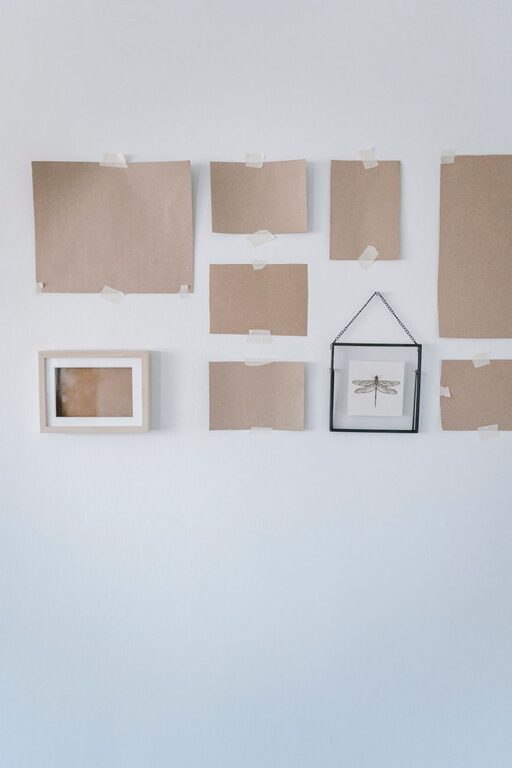
Start by arranging your frames on the floor. Try different layouts until the spacing feels balanced. For an easy template, trace each frame onto paper, cut out the shapes, and attach them to the wall with painter’s tape.
Step back and check the arrangement from different angles. Once you are happy with it, hang the frames using the paper guides. Keep the spacing fairly even, usually between 5 and 10 centimetres, for a tidy appearance.
For a coordinated look, use frames in the same colour. For a more collected style, mix wood, metal, and painted frames while keeping a similar colour theme in the artwork.
2. Make a Fabric Wall Hanging
Fabric wall hangings add warmth, texture, and colour without requiring advanced crafting skills. You can use a woven textile, a piece of patterned fabric, or a scarf that is no longer being worn.
Simple method
- Choose a fabric that is large enough for the wall.
- Cut a wooden dowel slightly wider than the fabric.
- Fold the top edge of the fabric over the dowel.
- Secure the fold with fabric glue, hand stitching, or small clips.
- Tie string or cord to both ends of the dowel.
- Hang it from a wall hook.
For extra detail, add tassels, ribbon, wooden beads, or a second fabric layer. A neutral textile can create a calm look, while a bold pattern can become the focal point of a room.
3. Paint an Easy Geometric Design
You do not need to be an experienced artist to create a painted wall feature. Geometric shapes, arches, stripes, and simple colour blocks are beginner-friendly options.
Choose two or three colours that work well with your existing furniture. Use painter’s tape to mark straight lines, or trace around household objects to create circles and curves. For an arch, make a simple compass using string, a pencil, and a pin.
Apply thin coats of paint and allow each coat to dry before adding another. Remove painter’s tape while the final coat is still slightly damp to help create cleaner edges.
If you do not want to paint directly on the wall, create the design on a large canvas, a piece of plywood, or sturdy cardboard. This also makes it easier to change the decor later.
4. Turn a Mirror Into a Statement Piece
A plain mirror can become an attractive piece of wall decor with a few simple additions. This project is especially useful in small rooms because mirrors reflect light and can make a space feel more open.
Try framing the mirror with:
– Wooden trim
– Rope
– Bamboo sticks
– Beads
– Painted moulding
– Dried grasses
For a natural style, attach thin pieces of wood around the outer edge. For a coastal look, use rope or light-coloured materials. Paint the finished frame to match your room or leave it natural for a relaxed appearance.
Make sure the mirror is securely mounted, particularly if it is large or heavy. Follow the instructions for the wall anchors and hanging hardware you use.
5. Display a Collection of Baskets
Decorative baskets can add texture while filling a large, empty wall. They work especially well in dining rooms, living rooms, and entryways.
Collect baskets in different sizes and shapes, then arrange them on the floor before hanging them. You can create a symmetrical design or place the largest basket in the centre and build outward with smaller pieces.
Use strong hooks that are suitable for the weight of each basket. If the baskets are lightweight, removable hanging strips may be enough. Avoid placing them where they could be easily bumped or caught on clothing.
This idea is also a practical way to display baskets that are attractive but not used regularly for storage.
6. Make a Photo Clothesline
A photo clothesline is an affordable alternative to framed artwork. It is easy to update and works well in bedrooms, offices, and family spaces.
Attach a length of cord, wire, or ribbon between two wall hooks. Use wooden pegs or small clips to hang photographs, postcards, children’s drawings, or inspirational notes.
For a polished finish, keep the photographs similar in size or print them in the same style. For a more playful display, mix images, notes, and small paper decorations.
You can create one long line or hang two or three shorter lines in a vertical arrangement. Leave enough space between the rows so the display does not look crowded.
7. Build a Simple Floating Shelf Display
A floating shelf gives you a place to display small plants, books, candles, ceramics, or framed prints. It can also make a narrow wall more useful without taking up floor space.
Purchase a ready-made shelf or make one from a sanded wooden board and suitable brackets. Paint or stain the wood to match your room. Before drilling, use a level to mark the position and check for wall studs or choose appropriate anchors.
Keep the display balanced by combining objects of different heights. For example, place a small plant beside a stack of books and a leaning print. Avoid filling every centimetre of the shelf; a little open space helps the arrangement look intentional.
8. Use Nature-Inspired Decor
Natural materials can bring warmth and visual interest to a room. Consider arranging dried flowers, pressed leaves, branches, or grasses in frames or on a simple display board.
To press leaves and flowers, place them between sheets of paper inside a heavy book for several days. Once dry, arrange them on thick paper and place them in a frame.
You can also hang small bundles of dried plants from hooks or display branches in a lightweight vase mounted to the wall. Keep natural materials away from heat sources and areas with high moisture.
Tips for a Successful DIY Wall Project
Before you begin, keep these practical tips in mind:
– Measure the wall and the decor before hanging anything.
– Use painter’s tape to test layouts without making extra holes.
– Choose hardware based on the weight of the item.
– Keep a consistent colour palette for a more unified look.
– Leave some empty wall space so the display can breathe.
– Check that artwork is hung at a comfortable viewing height.
– Protect nearby floors and furniture when painting or gluing.
The best wall decor does not need to be expensive or perfect. Start with one small project, use materials you enjoy, and adjust the design to suit your home. A handmade display can add colour, texture, and personality while making your space feel more complete.
