
Simple Ways to Practise Creativity Every Day
Creativity is often treated as a special talent reserved for artists, writers, and musicians. In reality, creativity is a way of thinking that everyone can practise. It helps us solve problems, express ourselves, notice new possibilities, and bring more enjoyment to ordinary moments.
You do not need expensive supplies, long stretches of free time, or a perfect idea to become more creative. Small, regular activities can make creativity feel natural and accessible. The key is to focus on curiosity rather than results.
Here are simple ways to practise creativity every day.
Start with five minutes
A creative habit does not need to take up your entire morning or evening. Begin with five minutes and choose one small activity:
– Write a few sentences in a notebook.
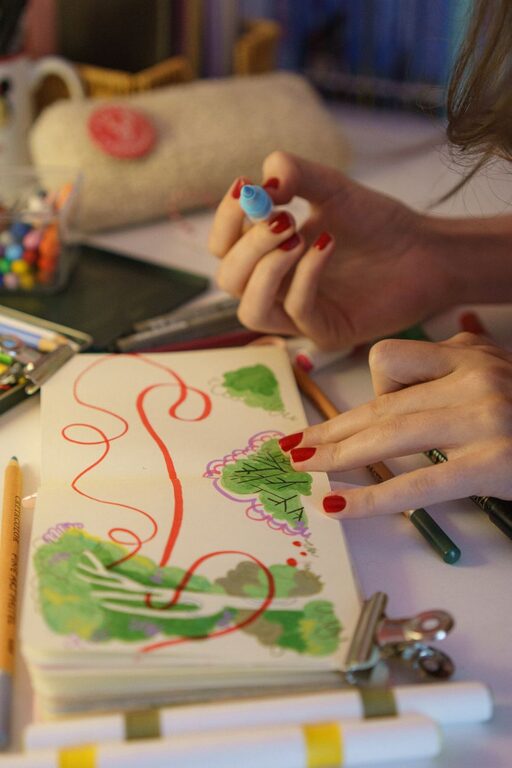
– Sketch an object nearby.
– Take a photo of an interesting detail.
– Rearrange a shelf or tabletop.
– Make up a short story.
– List new uses for an everyday object.
Starting small removes pressure. You are more likely to continue when the activity feels manageable. Over time, five minutes may naturally become 10 or 20, but there is no need to rush.
The goal is to create a regular opportunity for creative thinking, not to complete a major project every day.
Keep a collection of ideas
Creative ideas often appear at unexpected times. Keep a notebook, notes app, or folder where you can save them. Record anything that catches your attention, including:
– Interesting words or phrases
– Questions you would like to explore
– Colours, shapes, or sounds you notice
– Topics you want to learn about
– Problems that might have unusual solutions
– Memories that could inspire a story or project
Do not judge your ideas as you collect them. Some may seem ordinary at first, while others may become useful later. A growing list gives you something to return to when you are not sure what to create.
You can also divide your collection into categories, such as writing prompts, home projects, drawing ideas, recipes, and places to visit.
Change your surroundings
A small change in your environment can encourage you to see things differently. Try working in a new room, visiting a library, taking a different route on a walk, or sitting in a different place at home.
You can also refresh your surroundings by:
– Moving a few items on your desk
– Adding a plant or colourful object
– Playing a different type of music
– Displaying photographs or artwork
– Clearing away visual clutter
– Working near a window
New surroundings give your mind fresh details to notice. Even a short walk can provide colours, textures, sounds, and patterns that may spark an idea.
Ask “What if?”
Questions are powerful tools for creative thinking. When you notice something familiar, ask how it could be changed or viewed in another way.
Try questions such as:
– What if this object were twice as large?
– What if I used a different material?
– What if the usual order were reversed?
– What if I had to explain this to a child?
– What if I combined two unrelated ideas?
– What if I approached this problem from another person’s point of view?
These questions are useful for many activities, from writing and drawing to planning meals or organizing a room. They encourage you to move beyond the first solution.
Give yourself creative limits
It may seem that complete freedom would make creativity easier, but too many choices can feel overwhelming. Limits can provide a helpful starting point.
For example, challenge yourself to:
– Write a story using 100 words
– Draw with only two colours
– Take photos of circles during a walk
– Create a meal using five ingredients
– Write a poem without using a certain word
– Make something from materials you already have
A clear boundary gives your mind a direction. It also makes creative activities easier to fit into a busy day. Once you have worked within the limit, you can decide whether to continue or try something new.
Practise noticing
Creativity begins with attention. When you slow down and observe your surroundings, you collect details that can later become ideas.
During an ordinary day, notice:
– The way light falls across a room
– The sounds in your neighbourhood
– The texture of a building or tree
– The expressions and movements of people
– The colours used in signs and packaging
– The changing weather and seasons
You do not need to record everything. Simply pausing to notice more can make familiar places feel new. If you like, choose one detail each day and describe it in a sentence or sketch it in a notebook.
Try a different creative activity
It is easy to assume that creativity must involve one particular skill. If you usually write, try drawing. If you enjoy cooking, experiment with music. If you take photographs, try making a collage.
Exploring different activities can help you discover unexpected interests. It can also improve your main creative practice by introducing new ways to think about shape, rhythm, colour, structure, or storytelling.
Choose activities that feel enjoyable rather than impressive. You might try:
– Collage
– Hand lettering
– Gardening
– Baking
– Photography
– Singing
– Crafting
– Journalling
– Decorating
– Improvising a simple dance
The purpose is exploration, not mastery.
Make room for imperfect work
Many people avoid creative activities because they worry about producing something poor or unfinished. This concern can make it difficult to begin. Remember that practice is allowed to be messy.
Set aside time for work that no one else needs to see. Draw a rough sketch, write a weak first draft, or experiment with an unusual combination of colours. These attempts are not failures; they are part of the process.
One helpful rule is to separate creating from evaluating. First, make something without judging it. Later, if you wish, review it and decide what you would like to improve. This approach makes it easier to take risks and discover new ideas.
Use everyday tasks as creative prompts
You do not need to wait for free time to practise creativity. Turn ordinary tasks into small challenges.
For example:
– Describe a familiar room as if you were seeing it for the first time.
– Find a new way to organize a cupboard.
– Create a different route for a regular walk.
– Use leftovers to design a new meal.
– Choose a colour theme for your day.
– Give a common object an imaginative backstory.
These activities add variety to routines and help you find creative opportunities in places you may normally overlook.
Build a routine that suits you
The best creative habit is one you can maintain. Choose a time and activity that fit your life. You might write before breakfast, sketch during a lunch break, take photographs on an evening walk, or collect ideas before bed.
Keep your supplies easy to reach. A notebook on your desk, pencils in a cup, or a folder on your phone can reduce the effort needed to begin.
Most importantly, measure success by participation rather than perfection. A few minutes of creative practice can be valuable, even when the result is unfinished. With regular attention and a willingness to experiment, creativity can become a simple and enjoyable part of everyday life.
