
How to Create a Relaxing Home Workspace
Why a Relaxing Workspace Matters
A home workspace should help you feel comfortable, focused, and ready to begin. It does not need to look like a showroom or require expensive furniture. Small changes to your surroundings can make the area feel calmer and easier to use throughout the day.
A relaxing workspace combines practical design with personal comfort. The goal is to create a space that supports concentration without feeling rigid or overly formal. With the right layout, lighting, storage, and daily habits, even a small corner can become an inviting place to work.
Choose the Right Location
Start by choosing the best available spot in your home. If you have a separate room, consider placing your desk near a window or in an area with natural light. If your workspace is part of a bedroom, living room, or dining area, use furniture or a small screen to create a sense of separation.
Think about the following factors:
– Noise levels during your usual working hours
– Access to natural light
– Distance from household distractions
– Available electrical outlets
– Space for your chair, desk, and storage
– How easily the area can be packed away when work is finished
A quiet location is helpful, but it is not essential. If background noise is unavoidable, consider using a soft rug, curtains, or a bookcase to reduce echoes. These additions can also make the space feel warmer and more finished.
Select Comfortable, Practical Furniture
Your desk and chair form the foundation of the workspace. Choose pieces that fit the room and allow you to work without crowding the area.
A desk should provide enough surface space for your computer, notebook, water bottle, and any other items you use regularly. Avoid choosing a desk that is so large it overwhelms the room. A narrow desk, wall-mounted surface, or corner desk can work well in a smaller home.
Your chair should support a relaxed, upright sitting position. Look for:
– A seat height that allows your feet to rest flat on the floor
– A backrest that supports your back
– Enough seat depth to feel comfortable
– Adjustable features, if available
– Materials that remain comfortable during longer work periods
Place your screen directly in front of you rather than at an angle. The top of the screen should be close to eye level, so you do not need to look down constantly. If necessary, raise your monitor or laptop with a sturdy stand or a stack of books.
Use Lighting to Create a Calm Atmosphere
Lighting has a strong effect on how a workspace feels. Whenever possible, make use of daylight without positioning your screen directly in front of a bright window. A desk placed at a right angle to the window can provide natural light while reducing glare.
Add a desk lamp for cloudy days, evening work, or areas with limited daylight. A lamp with an adjustable shade lets you direct light where you need it. Choose a warm or neutral light that feels comfortable rather than harsh.
You can also improve the overall atmosphere with layered lighting:
– Natural light during the day
– A desk lamp for focused tasks
– A floor or table lamp for softer background light
– Small accent lights for a welcoming touch
Keep cables tidy so they do not create visual clutter. Cable clips, a cable box, or simple ties can help keep wires together and out of the way.
Choose Colours and Materials Carefully
The colours and textures around your desk can influence the mood of the room. Soft neutrals, muted greens, gentle blues, and warm earth tones can create a peaceful look. You do not need to repaint the entire room. A small wall hanging, desk mat, cushion, or storage box can add colour without making a permanent change.
Natural materials can also make the space feel more inviting. Consider adding:
– A wooden desk or shelf
– A woven basket for storage
– A cotton or wool cushion
– A ceramic mug or plant pot
– A small rug to soften the floor
Aim for a balanced mix rather than filling every surface. Too many decorations can make the workspace feel busy and difficult to maintain.
Keep the Area Organised
A tidy desk is easier to use and can make it simpler to begin work. Start by removing items that do not belong in the workspace. Then divide the remaining items into three groups: use every day, use occasionally, and store elsewhere.
Keep everyday essentials within easy reach. Place less frequently used supplies in a drawer, box, or nearby cupboard. Open shelving can be useful, but avoid filling it with too many small objects.
Try these simple organisation ideas:
– Use one tray for notebooks and papers
– Store pens and small tools in a container
– Label boxes that hold occasional supplies
– Keep a small basket for items that need to be moved elsewhere
– Clear the desk at the end of each workday
A workspace does not need to be perfectly empty. The aim is to make important items easy to find while reducing unnecessary visual noise.
Add Natural Elements
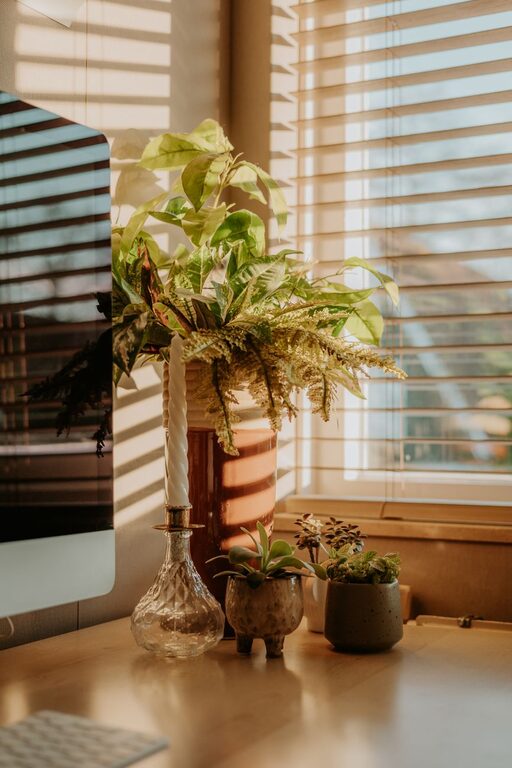
Plants, flowers, and natural textures can bring life to a home workspace. Choose a plant that suits the amount of light available and the level of care you prefer. A small plant on a shelf may be enough if your desk is limited in size.
If a living plant is not practical, try a vase of dried flowers, a nature-inspired print, or a small bowl made from wood or stone. These details can add character without taking up much space.
Keep plants and decorative objects positioned so they do not block your screen, reduce working space, or require constant rearranging.
Create a Clear Boundary Between Work and Home
One challenge of working at home is knowing when the workday has ended. A simple closing routine can help create a clearer boundary.
At the end of the day:
- Save your work and close unnecessary applications.
- Return stationery and other supplies to their usual places.
- Write down the first task for the next work session.
- Wipe the desk if needed.
- Turn off the lamp and move away from the workspace.
If your desk is in a shared room, use a basket, folding screen, or cabinet to hide work materials when you are finished. This helps the room return to its normal purpose.
Add Personal Details
A relaxing workspace should feel like it belongs to you. Add a few items that make the area pleasant, such as a favourite print, a framed photograph, a comfortable cushion, or a small object collected during a trip.
Choose personal details that support the mood you want. A simple quote, a calming colour, or a piece of artwork can make the space feel more welcoming. Keep the number of items limited so the workspace remains practical.
You can also create a small refreshment area with a water bottle, mug, or covered container for snacks. Keeping these items nearby may reduce the need to leave your workspace repeatedly, while still encouraging regular breaks.
Review the Space Regularly
Your needs may change over time. After using the workspace for a week or two, notice what feels comfortable and what causes frustration. Perhaps the lamp needs to move, the chair requires an adjustment, or frequently used supplies should be placed closer to you.
Make one small improvement at a time. A relaxing workspace is created through steady adjustments, not one large makeover. When the space is comfortable, organised, and suited to your routine, it becomes easier to settle in and work with a calmer mindset.
